
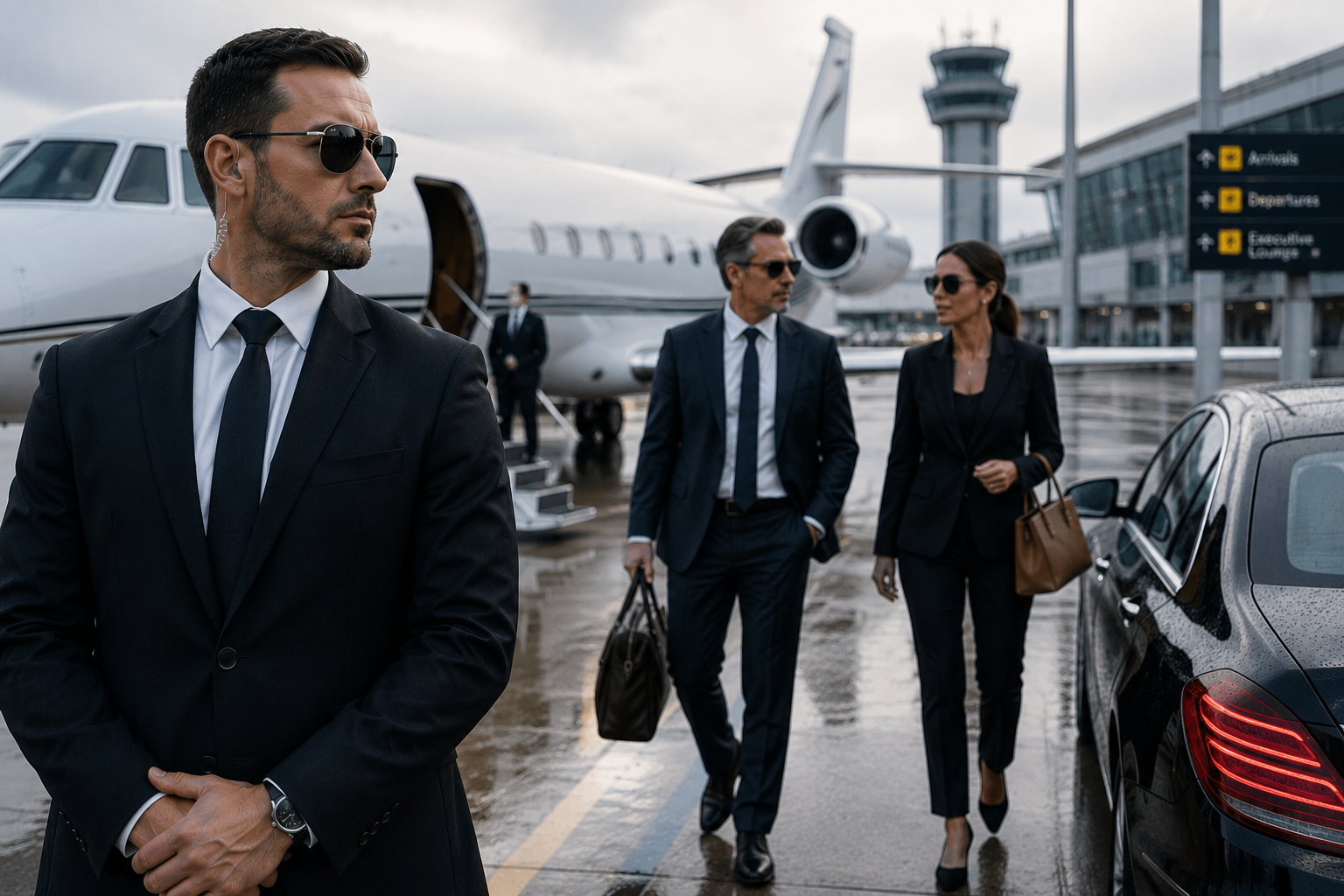
For organisations also considering domestic executive protection, many of the same disciplines apply: close protection officers, advance work, and risk assessment are common to both residential and travel assignments.
Business travel exposes executives to risks that their domestic security arrangements do not cover. From airports and hotels to unfamiliar road networks and foreign healthcare systems, travel introduces variables that require different planning and different professional support. This guide explains what business travel security involves and how to approach it practically.
Why Business Travel Creates Security Risk
At home, most executives follow predictable routines in familiar environments. They know the routes, the people, and the buildings. Travel removes all of that. A senior executive on a business trip is temporarily operating in an unfamiliar environment, often with reduced personal support, limited local knowledge, and a calendar that has been publicised in advance. These factors combine to create a window of vulnerability that threat actors, both opportunistic and deliberate, can exploit.
The risk profile varies significantly by destination. A trip to Frankfurt or New York is very different from a trip to Lagos, Riyadh, or Bogota. Even within low-risk destinations, the specific circumstances of a visit matter: the profile of the individual, the nature of the business, and whether the trip has attracted any public attention.
What Business Travel Security Involves
Professional travel security has several components that work together. None of them in isolation is sufficient.
Pre-travel threat assessment. Before any significant trip, particularly to a higher-risk destination, a threat assessment should be conducted. This identifies what risks the individual faces in that location, based on country conditions, the specific nature of the visit, and the individual’s own profile. The assessment drives decisions about what protective measures are appropriate and what briefings the traveller needs.
Destination intelligence. A good travel security briefing covers the current threat landscape in the destination country: crime patterns, kidnap risk, civil unrest, political instability, and health risks. This is not a generic travel advisory but a specific analysis calibrated to the individual’s itinerary and profile. It should include emergency contacts, hospital locations, UK embassy or consulate details, and evacuation options if conditions deteriorate.
Secure ground transport. In many destinations, the most significant risk is on the road. Securing reliable, vetted transport is fundamental. This means using a security-approved driver, planning routes in advance, and identifying alternatives in case the primary route is compromised. Opportunistic crime against business travellers frequently occurs during airport transfers when the traveller is tired, unfamiliar with the environment, and carrying identifiable equipment.
Hotel security. The choice of hotel, floor, and room matters. Reputable business hotels in central locations with active security protocols reduce exposure significantly. Travellers should avoid ground-floor rooms, secure passports and devices in the room safe, and know the evacuation routes. In higher-risk destinations, the security provider will pre-visit the hotel to assess its suitability.
In-country close protection. For higher-risk destinations or higher-profile principals, in-country close protection is appropriate. This means a qualified CPO or local security team accompanies the principal throughout the trip, from arrival to departure. The CPO handles ground movement, coordinates with local security contacts, and maintains a real-time picture of the threat environment.
Who Needs Business Travel Security?
Not every business trip requires close protection. The appropriate level of security depends on the destination risk, the profile of the individual, the nature of the business, and the duration of the trip. A useful framework is to ask three questions: what could go wrong, how likely is it, and what would the consequence be? The answers drive proportionate decisions rather than one-size-fits-all responses.
In practice, the executives most likely to need travel security support include those operating in extractive industries (mining, oil and gas) in politically unstable regions, those with a high public profile who are making visits to countries with active kidnap risk, those involved in sensitive commercial negotiations where counterparties might benefit from intelligence about the individual, and those with family members travelling in their company.
Combining Domestic and Travel Security
The most effective arrangements treat domestic and travel security as a single programme rather than separate concerns. A close protection team that knows the principal, understands their routines, and has built a relationship with them is far better placed to manage travel risk than an ad hoc team assembled for a specific trip. The transition from domestic to travel cover is also a vulnerable moment: handoffs between teams, changes in communication protocols, and unfamiliar logistics all create gaps that can be exploited.
Security and Safety Solutions provides travel security planning, threat and risk assessments for international travel, and in-country close protection services for corporate and private clients. Our team has experience operating in Europe, the Middle East, and Africa, alongside the full range of UK domestic assignments. For travel to the Gulf region specifically, see our Middle East close protection service. To discuss a travel security requirement in confidence, call 07939 532682 or use our contact form.
Related Services
- Security Consultancy - Pre-travel threat assessments and risk management advice
- International Close Protection - Specialist protection for international business travel
Last reviewed: June 2026
About the author
Tom Richmond is a safety and security subject matter expert with sixteen years of international consultancy and management experience. He served for seven years as a commissioned Army Officer in the Royal Military Police.
His qualifications include the NEBOSH Level 6 Diploma in Occupational Health and Safety, a Level 7 Diploma in Security Management, and a Level 5 Diploma in Leadership and Management. He is also an IFSM Fire Safety Professional and an HSE trained Principal Designer.
Contact Security and Safety Solutions for a confidential consultation.
We’re here to support you
We appreciate that most people haven’t used security services before, so we’ll support you every step of the way so that we fully understand the risk to you, and then provide you with a bespoke solution.
We are contactable 24/7 if you need us, we’re happy to come out and meet you for an introductory meeting, or if a conference call is easier, we’ll fit in around your schedule.
Get in contact now and we’ll talk you through potential options to improve your safety and security.

